Leningrad, two arrests, Soviet psychiatry
Born on 4 November 1957 in Leningrad, into an intelligentsia family. Graduated from a maths-track school. In 1975 he entered the History Faculty of Leningrad State University. From his youth he was drawn to revolutionary thought — to the narodniks and Marxists — holding views close to the Socialist-Revolutionary and Menshevik tradition. As a student, he took part in setting up the youth commune ‘Yellow Submarine’.
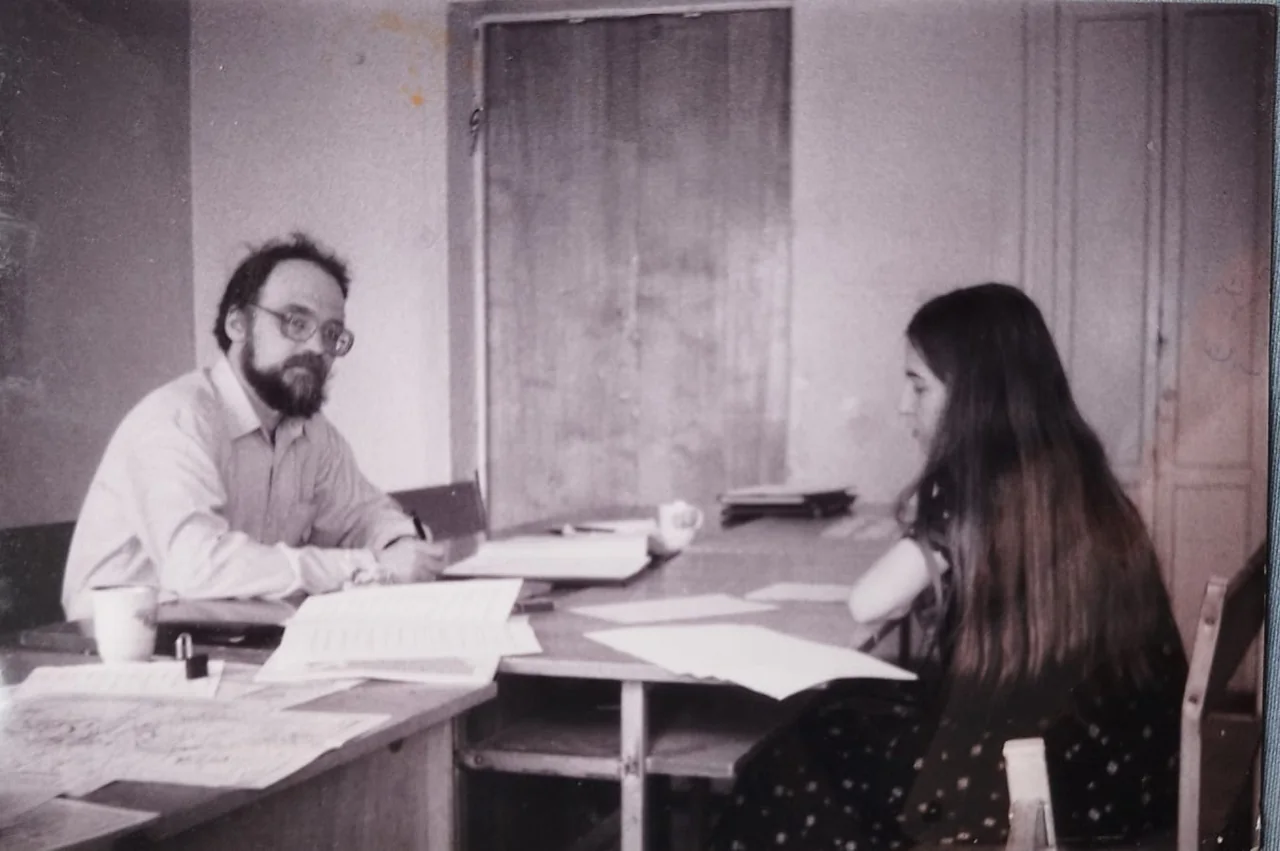
First questioned by the KGB in 1976, in a case about leaflets scattered near Gostiny Dvor by friends from an underground circle. Arrested in 1978 for taking part in an unofficial group publishing the typewritten journal ‘Perspektiva’ (under Article 70 of the RSFSR Criminal Code — ‘anti-Soviet agitation’). He turned down emigration and was sentenced to compulsory psychiatric treatment, where he stayed until mid-1981. There he made contact with dissidents from the late 1970s and early 1980s.
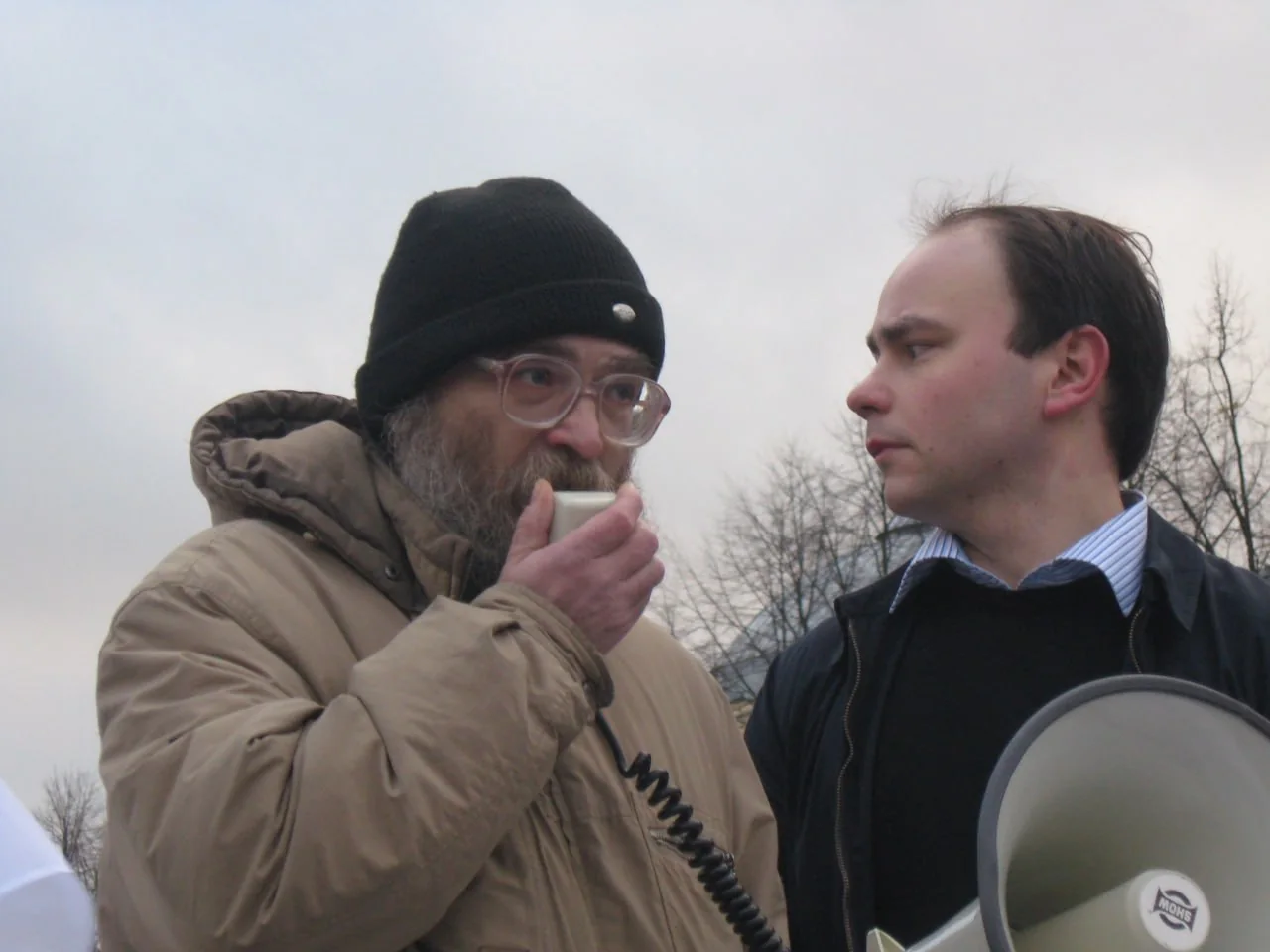
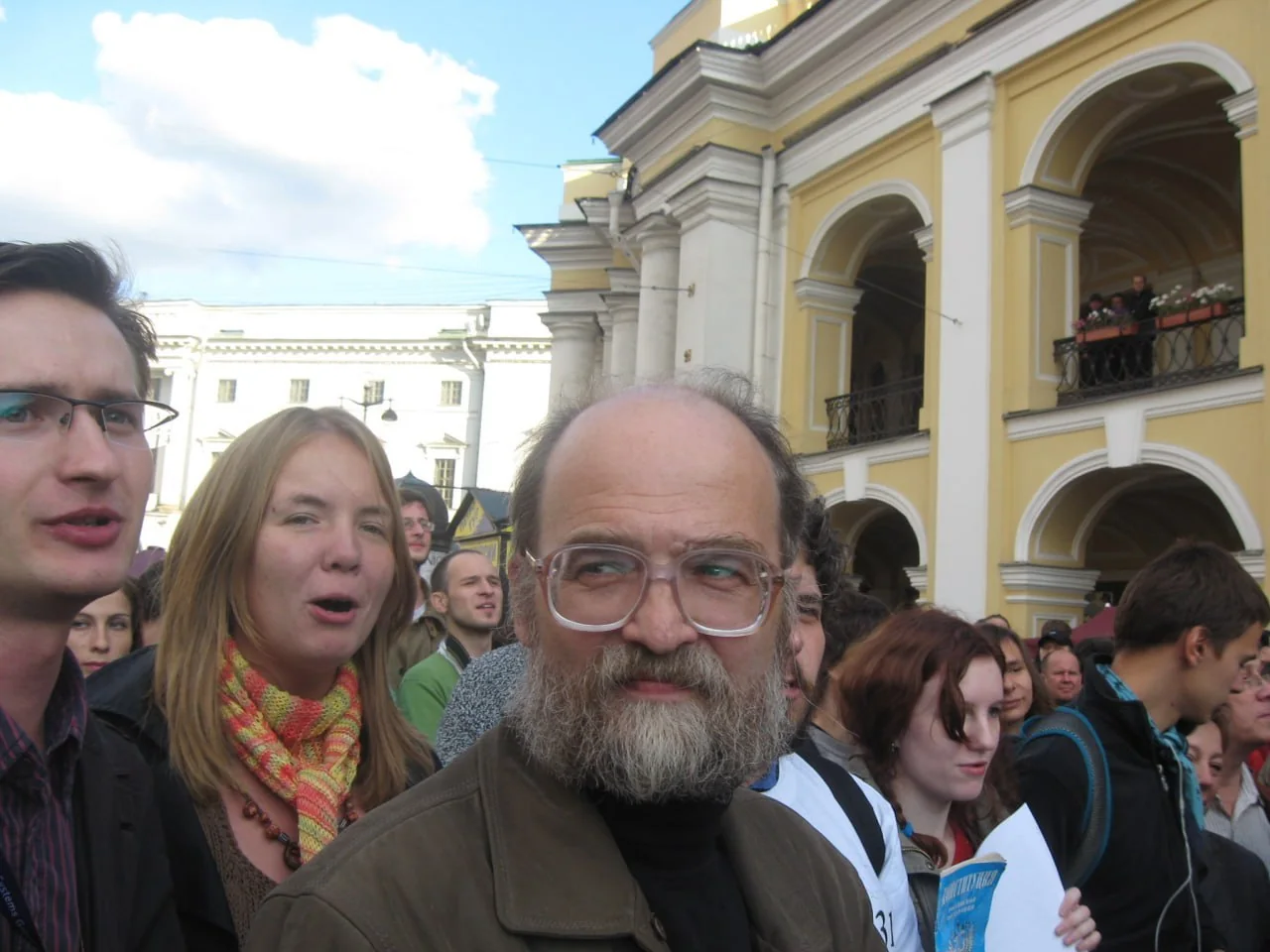
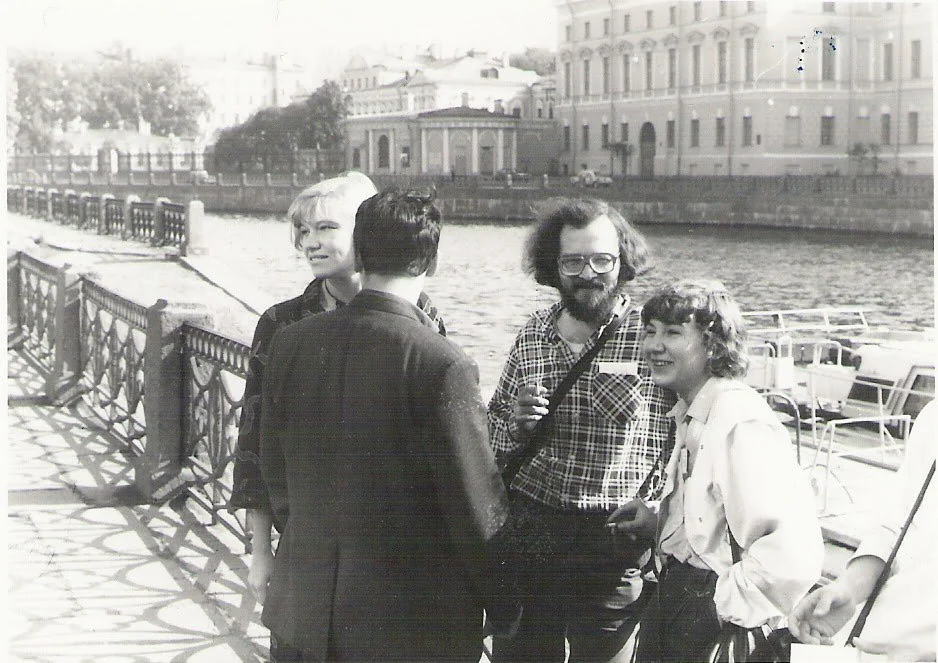
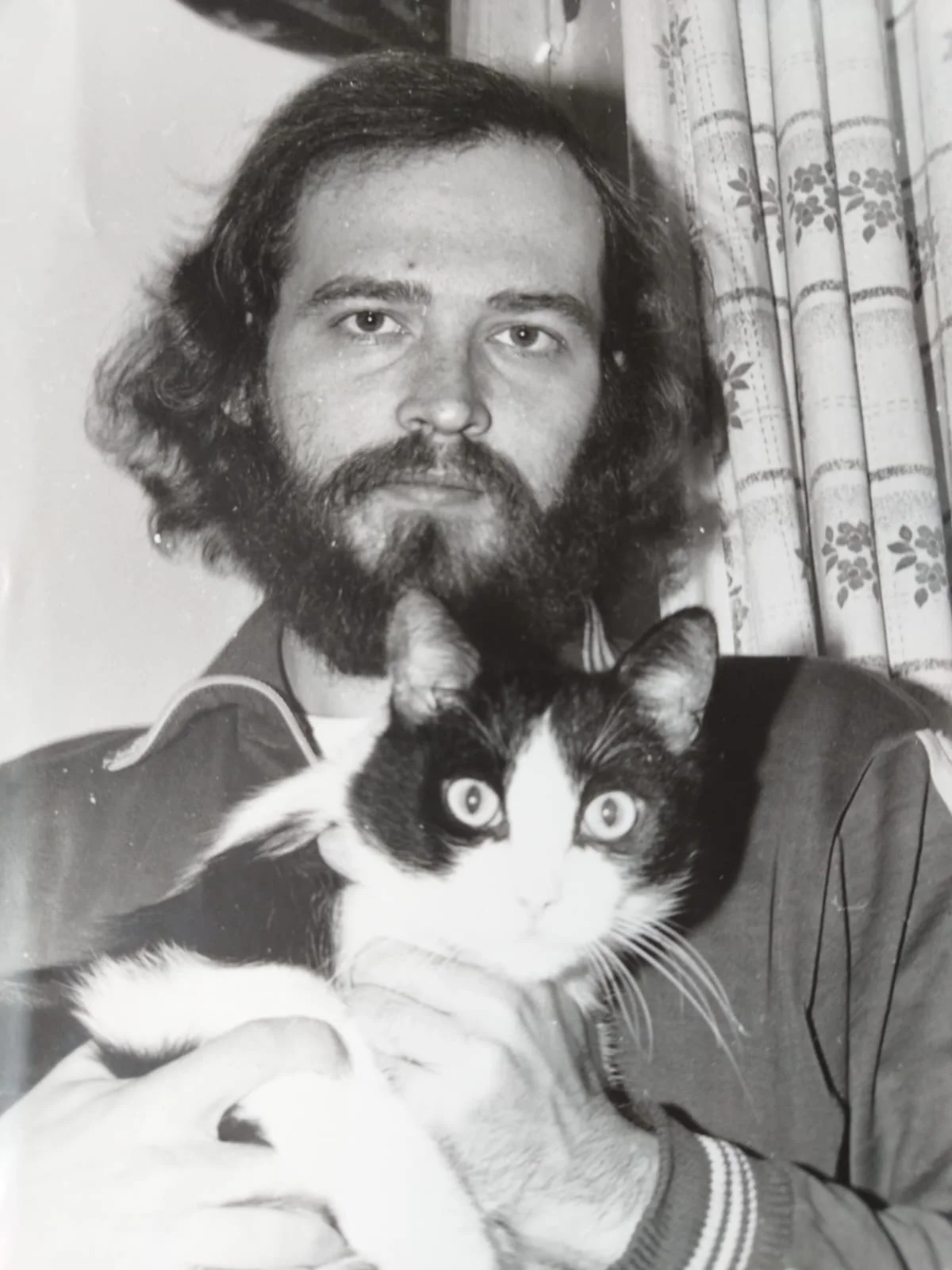
Archive insert I · 1976–1988. 5 photographs in total.
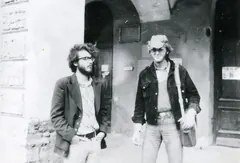
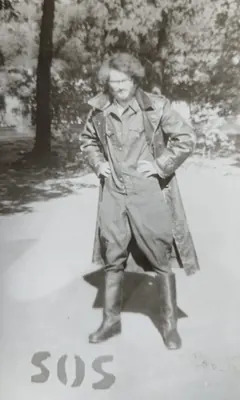
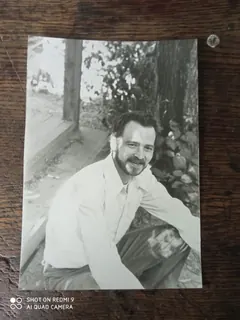
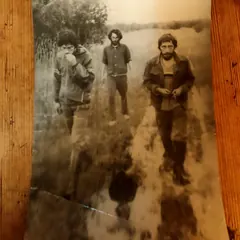
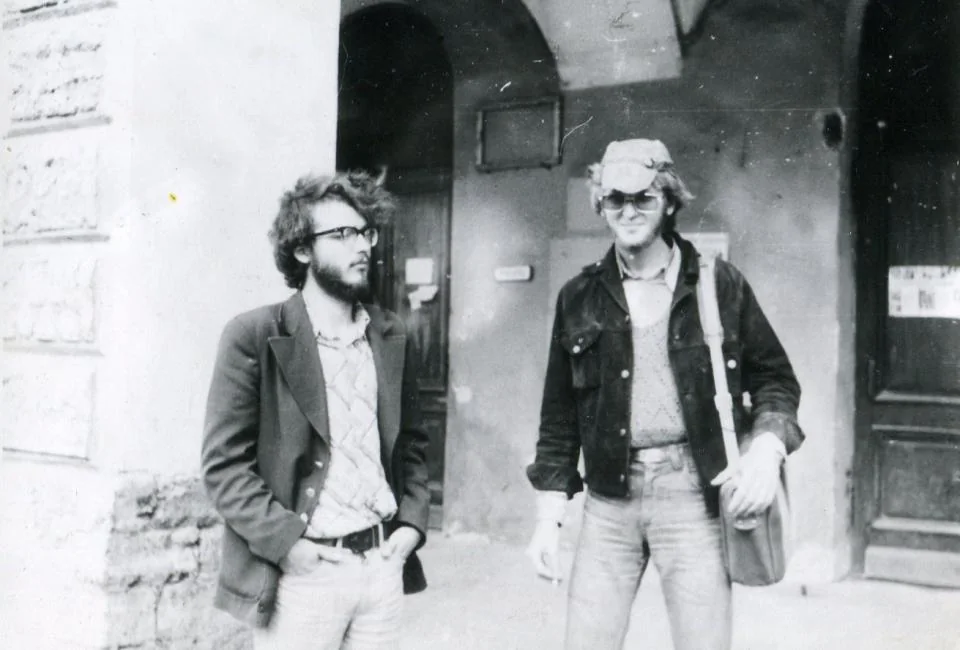
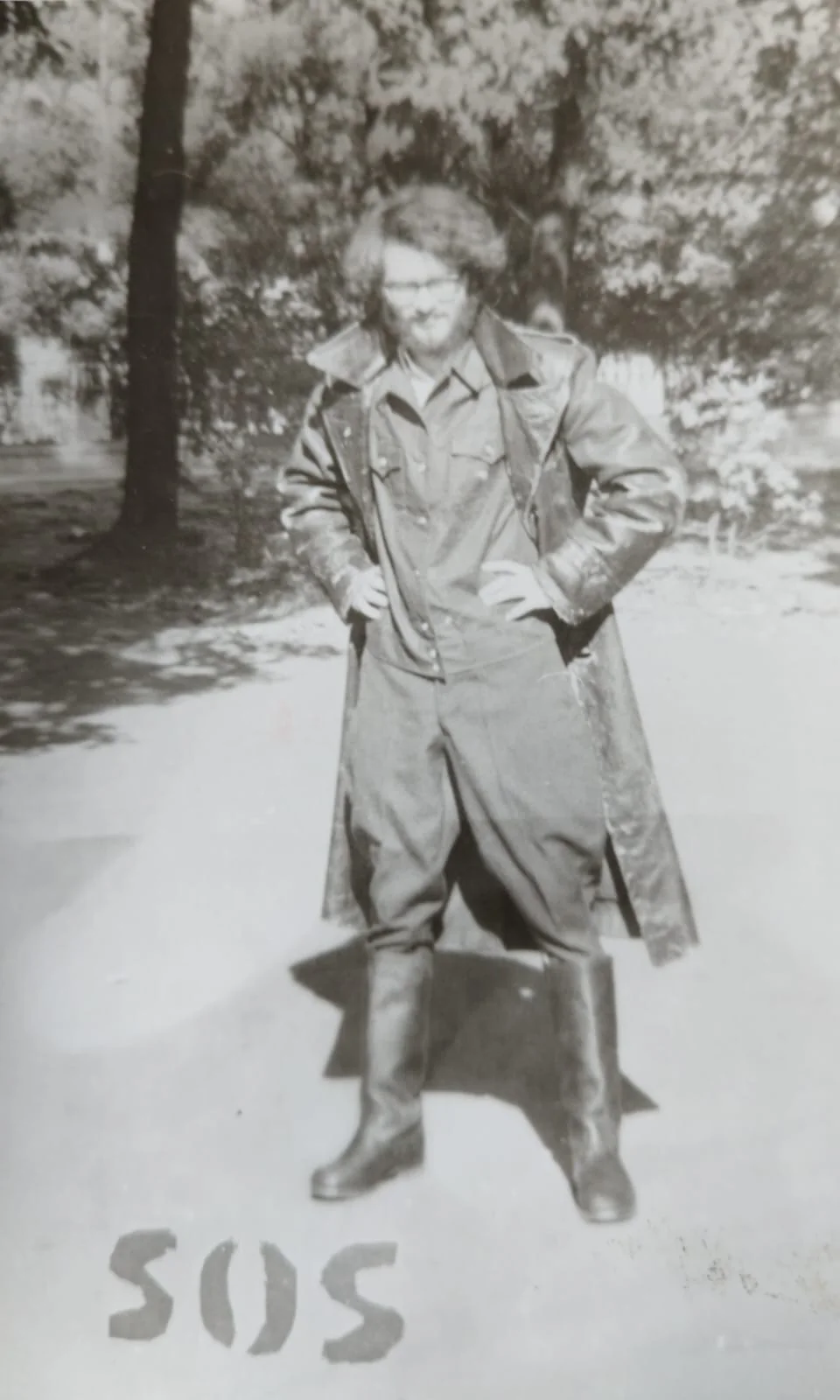
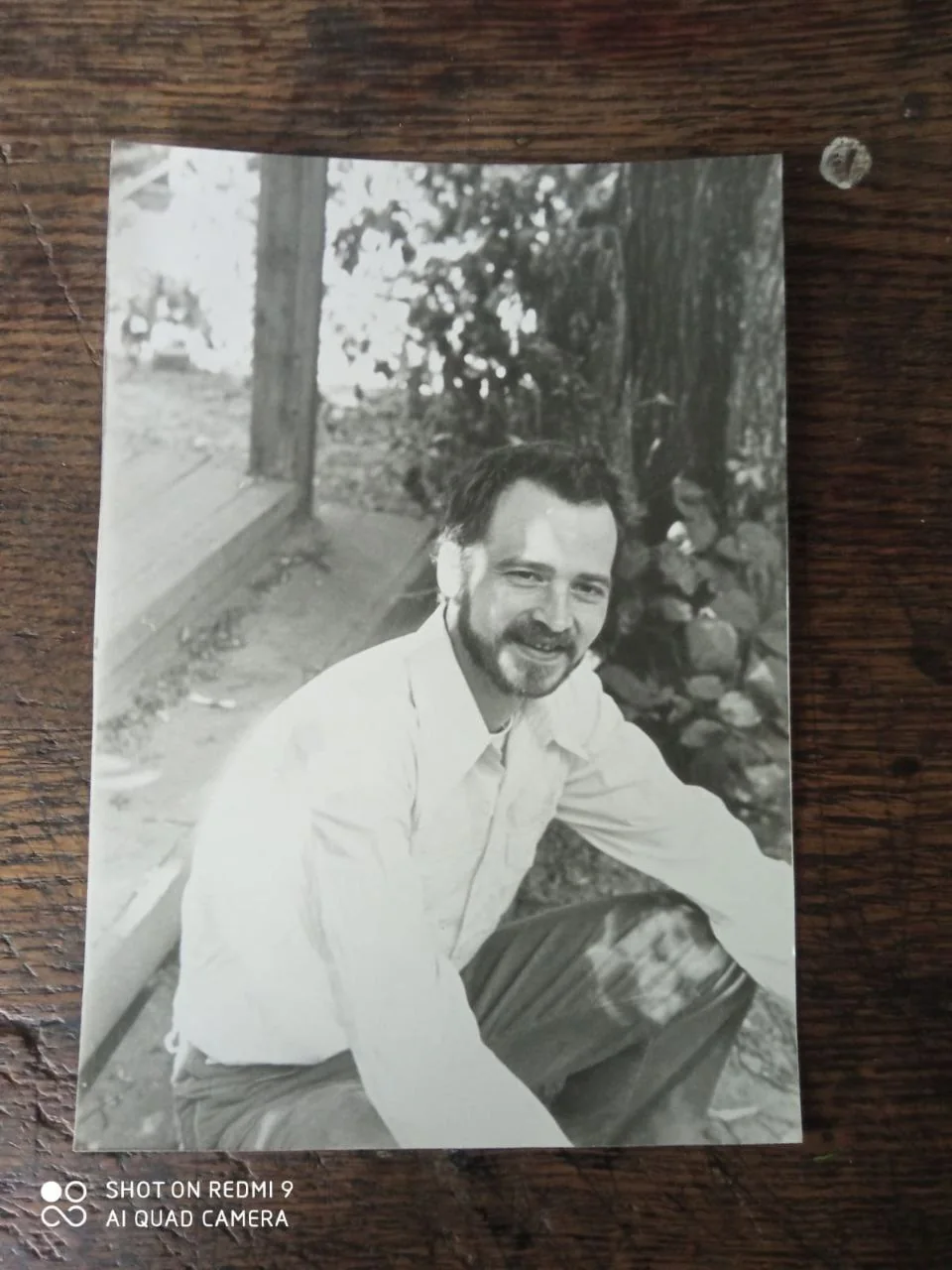
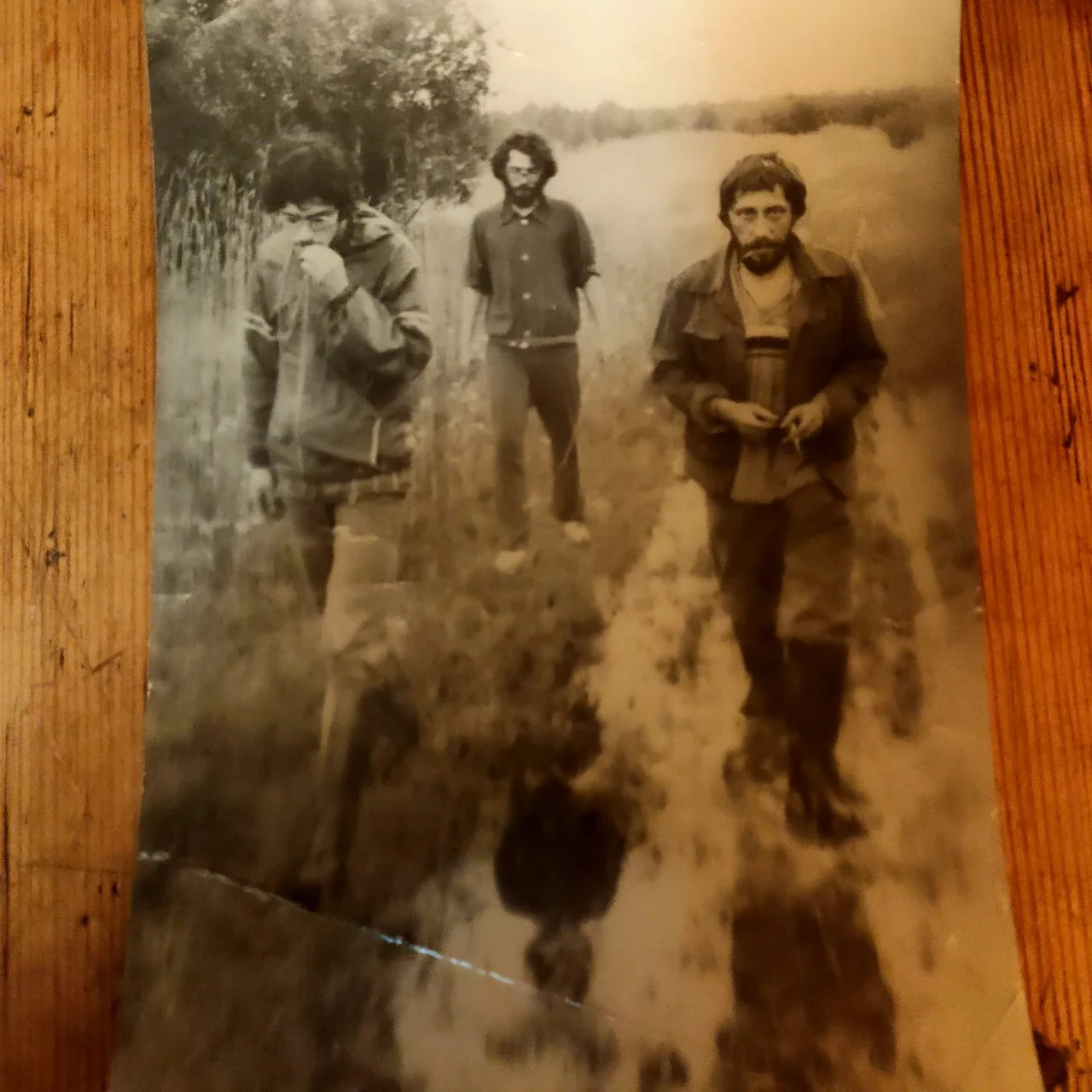
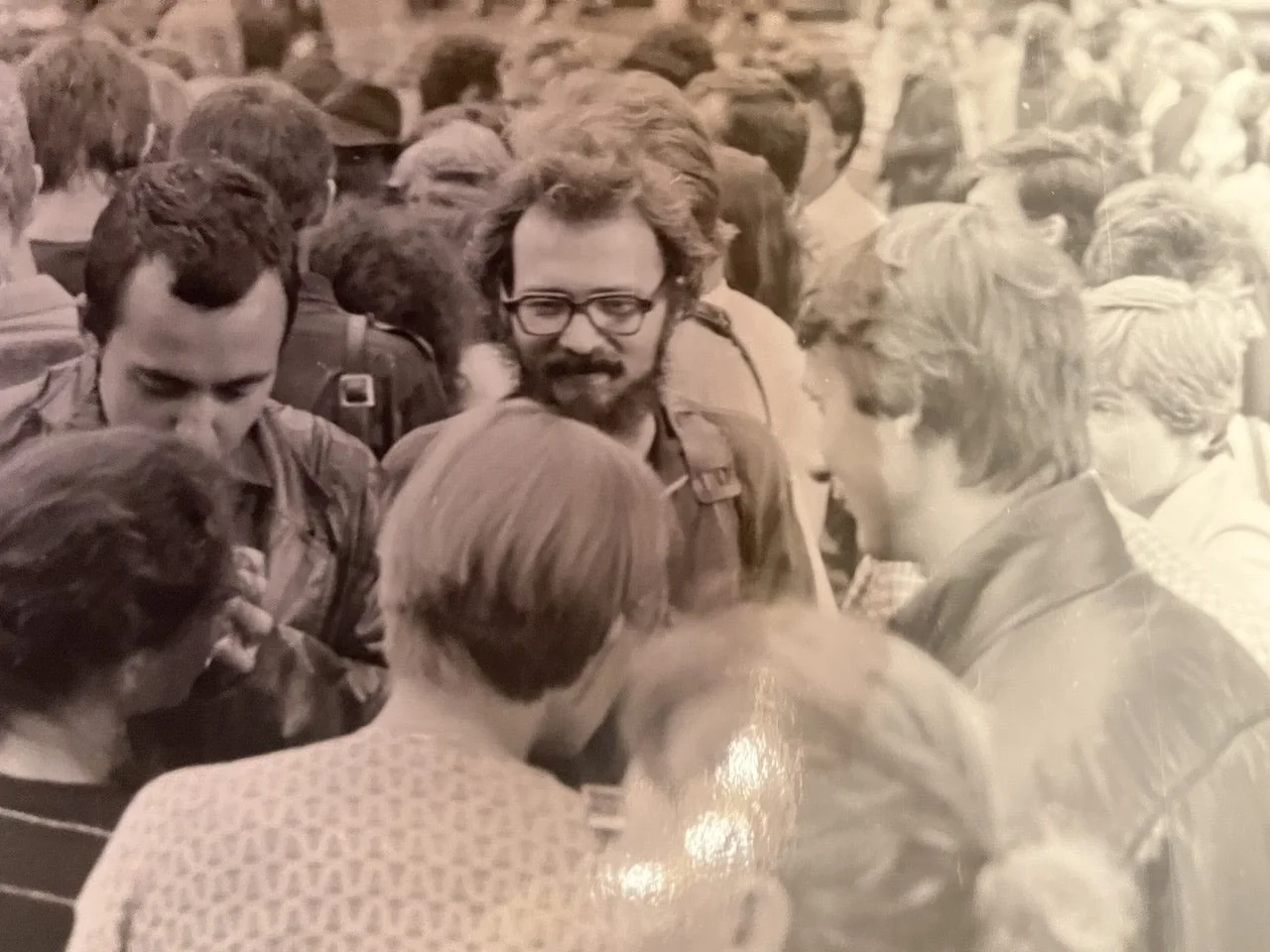
In the 1980s Soviet dissidents were inspired by Poland’s Solidarity. Skobov joined the Free Inter-Professional Union of Workers (SMOT), where he was nicknamed ‘Sashka the Marxist’ — the same nickname he still uses to sign his letters from prison. In 1982, in protest at the arrest of his comrade Lev Volokhonsky, he painted slogans on walls: ‘Free political prisoners! Solidarity lives!’ In late 1982 he was arrested again — again under Article 70. From 1983 to mid-1987 — again in special psychiatric hospital. By the time of his release he had spent more than seven years in confinement.
Democratic Union, school, a thousand columns
When he was freed in 1987 the country was already changing — perestroika had begun. He became one of the founders of the Democratic Union — the first legal opposition party in Soviet history; he sat on the coordination council of its Saint Petersburg branch. In 1988 he was tried under ‘Case No. 64’ — the last Soviet prosecution under the old version of Article 70; the case lapsed with the Soviet collapse.
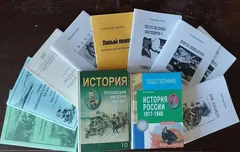
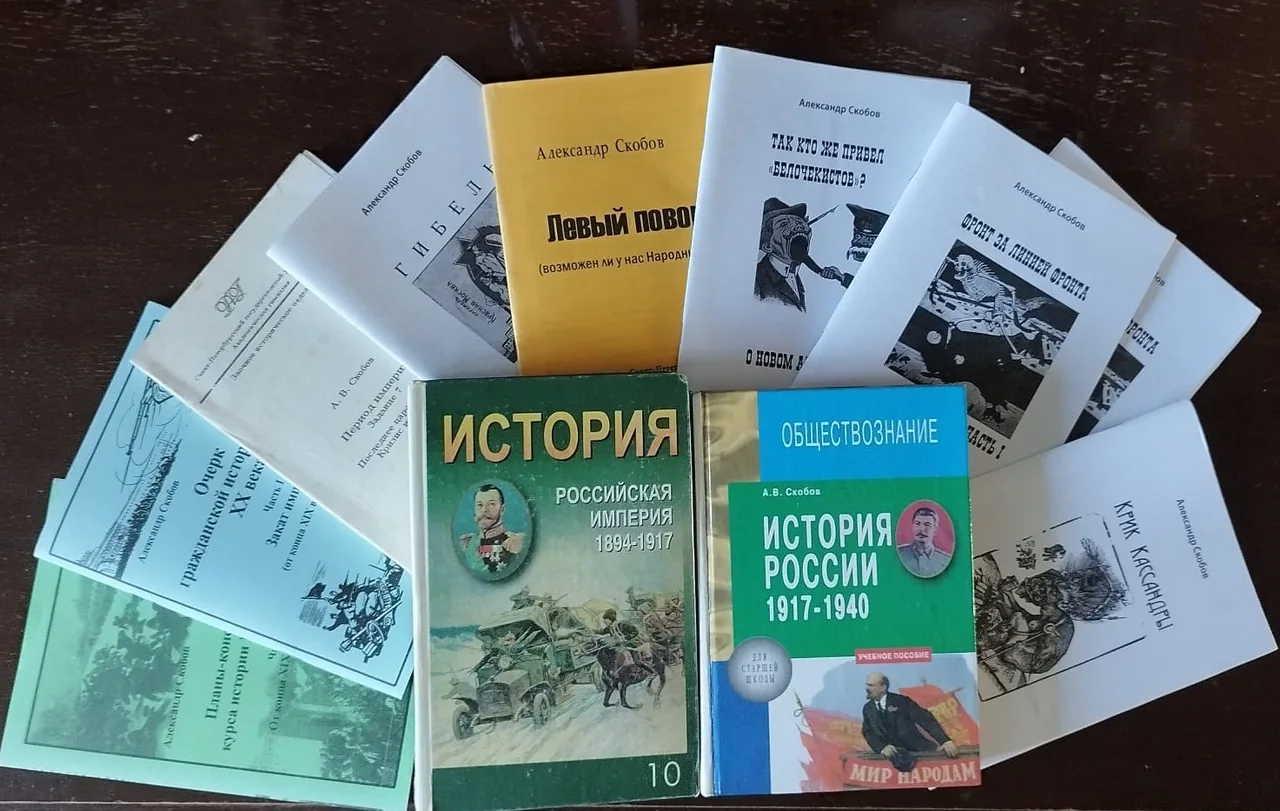
From the early 1990s through 2015 he taught history in Saint Petersburg schools. Two textbooks of his appeared, in 1997 and 2001 — on the Russian Empire 1894–1917 and on Russia 1917–1940. An active anti-war activist from the First Chechen war: he wrote articles, took to the streets, and in 2002–2003 published the bulletin ‘Anti-War Herald’.
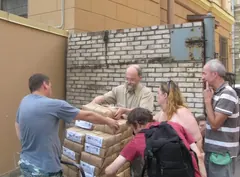
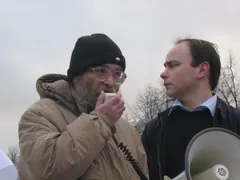
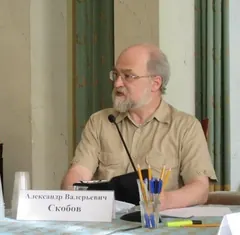
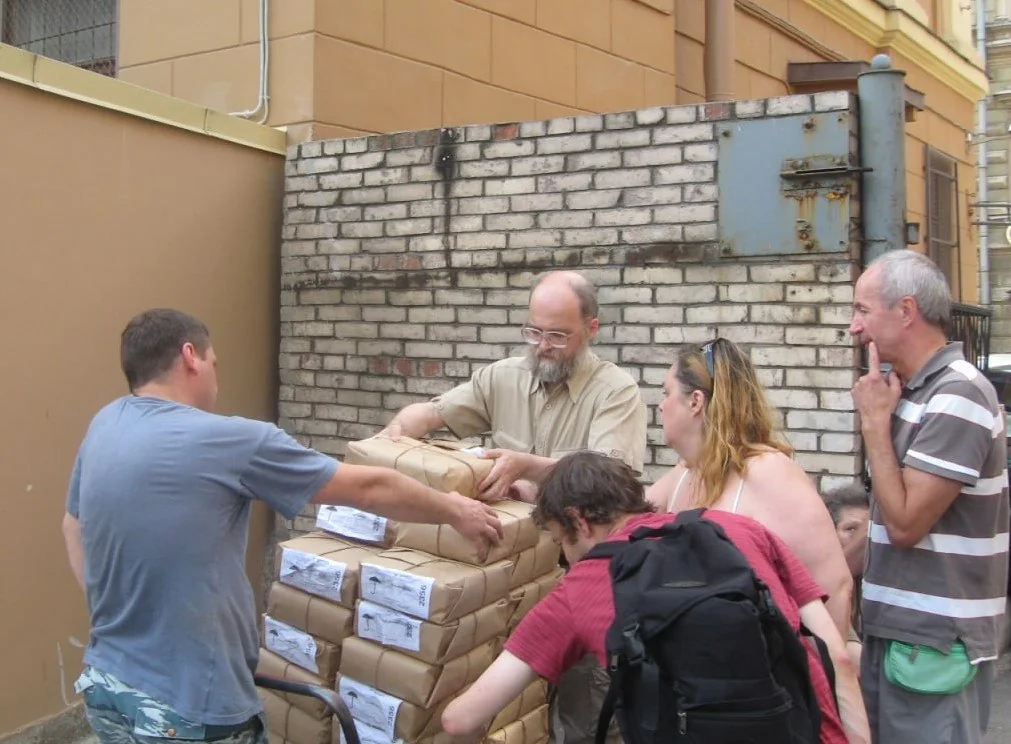
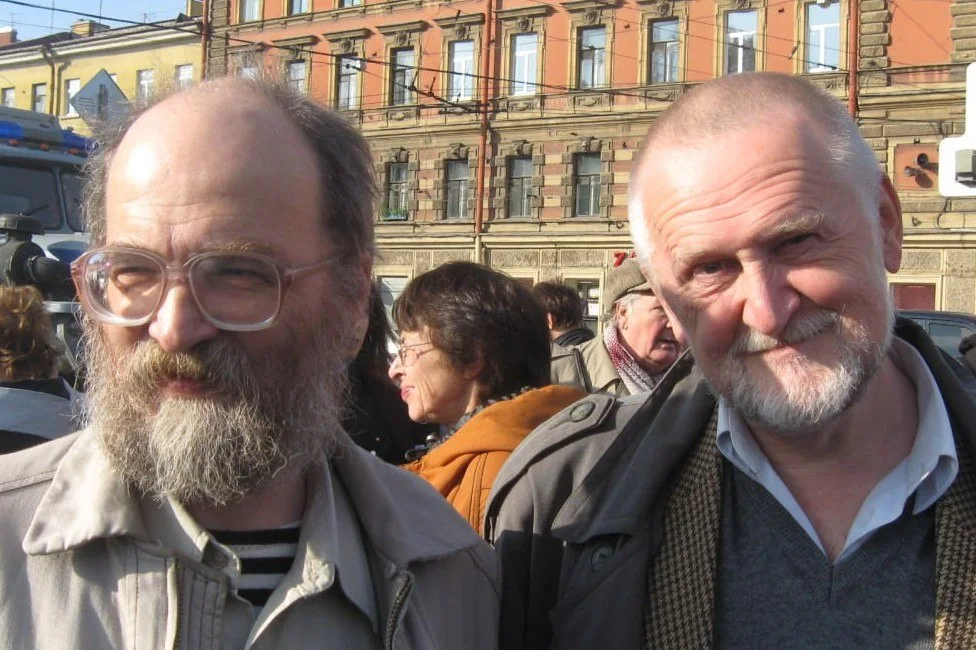
Archive insert II · 1990–2014. 9 photographs in total.
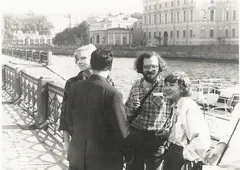
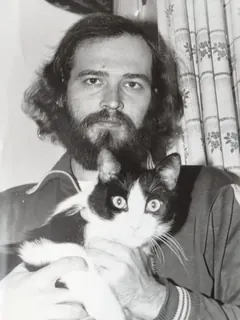
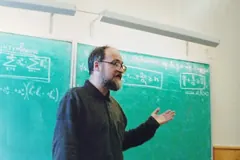
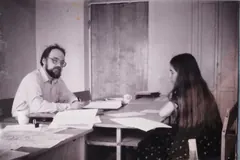
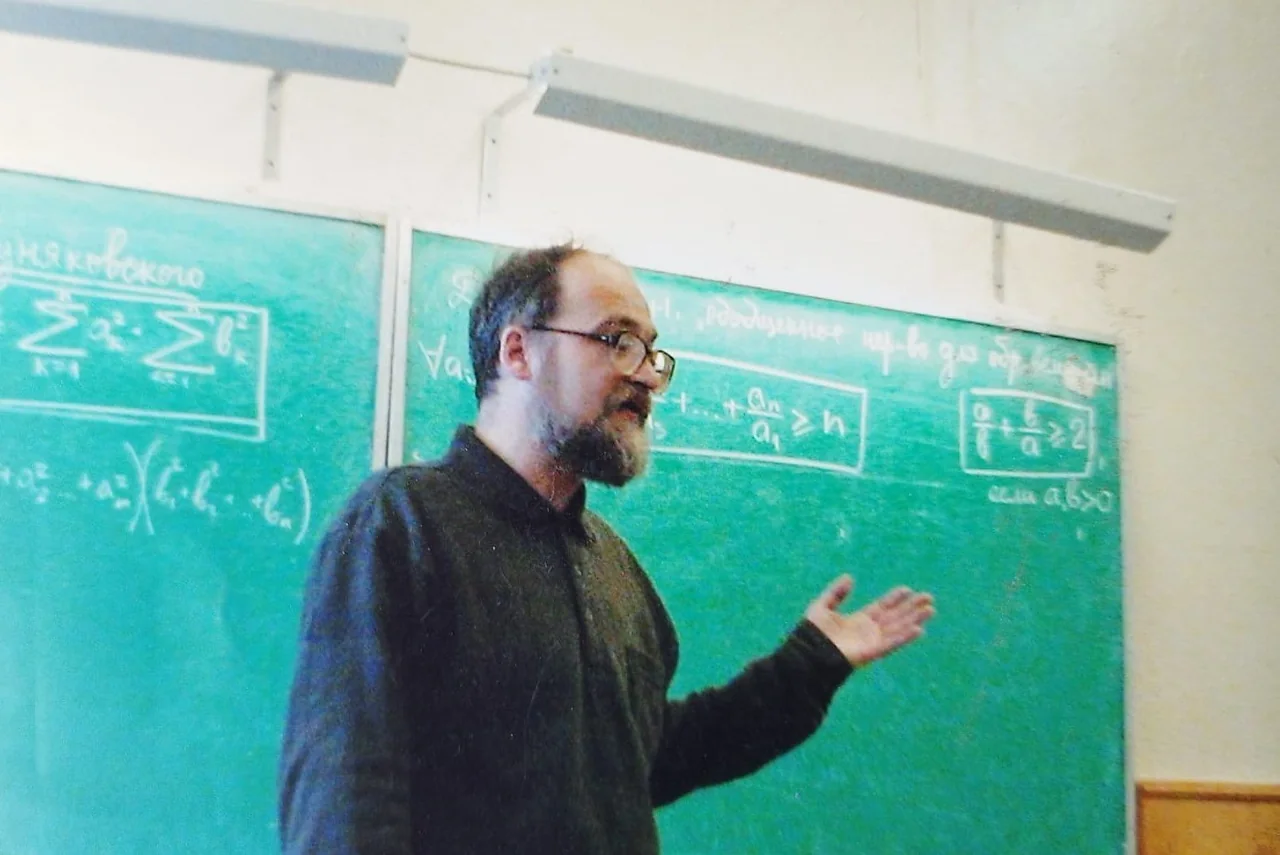
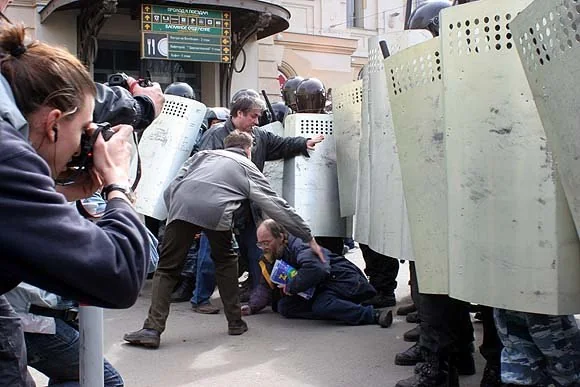
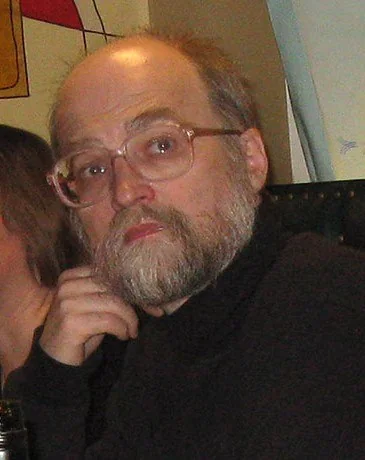
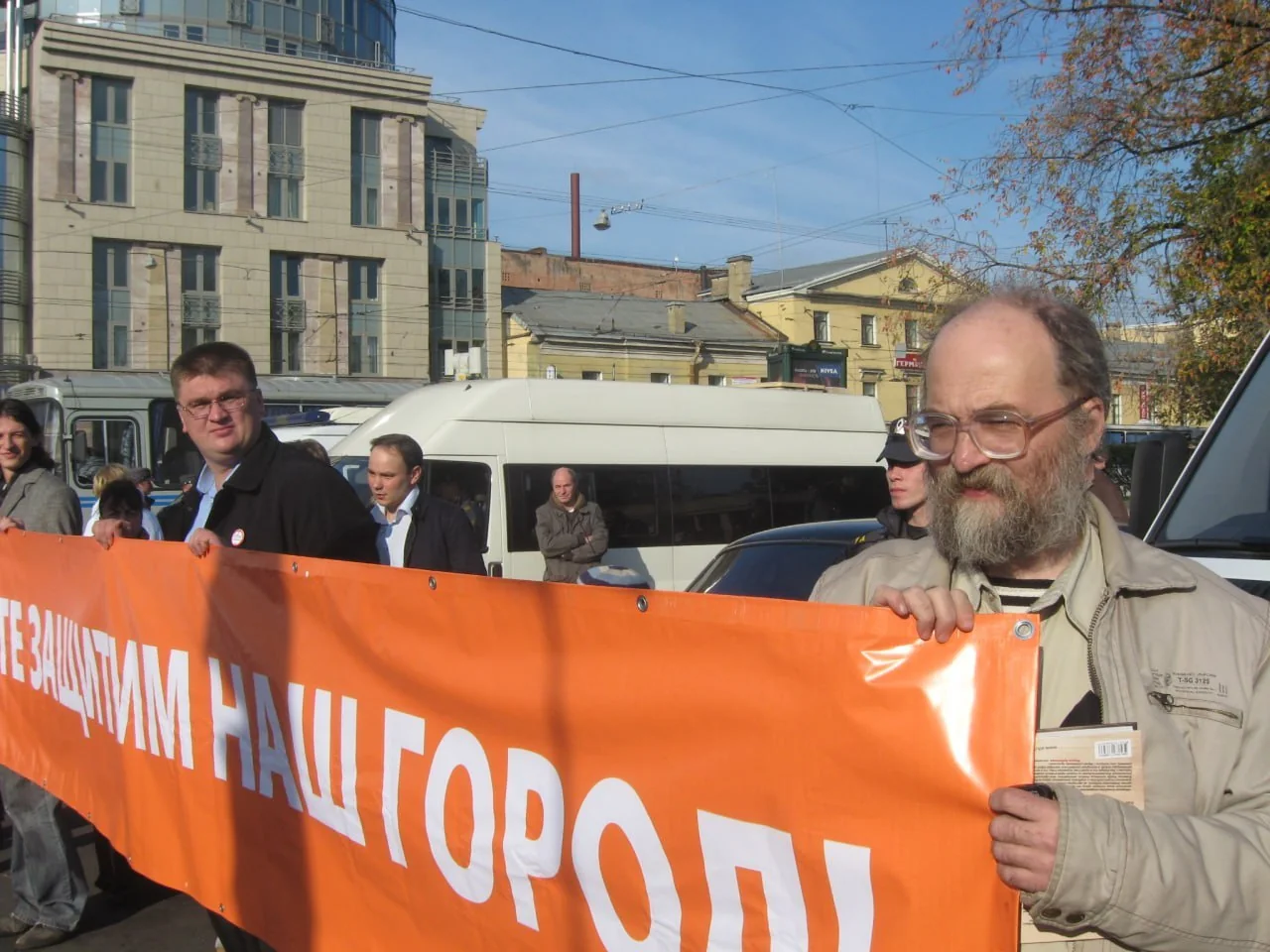
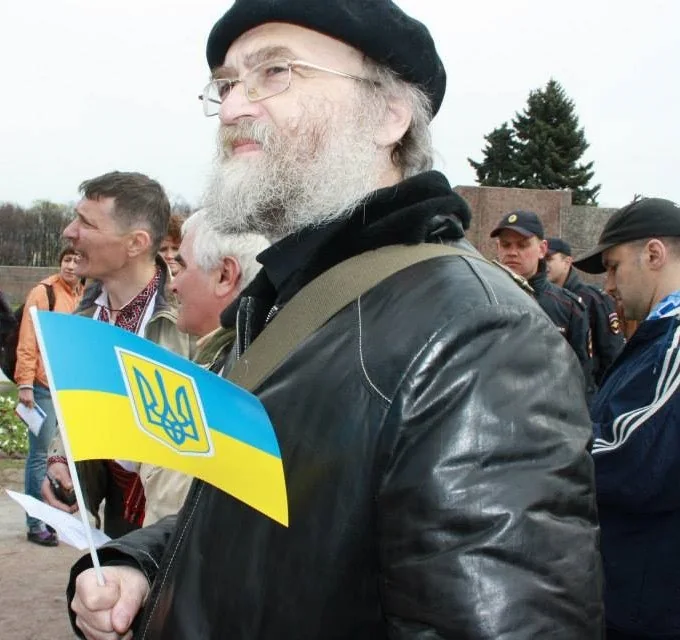
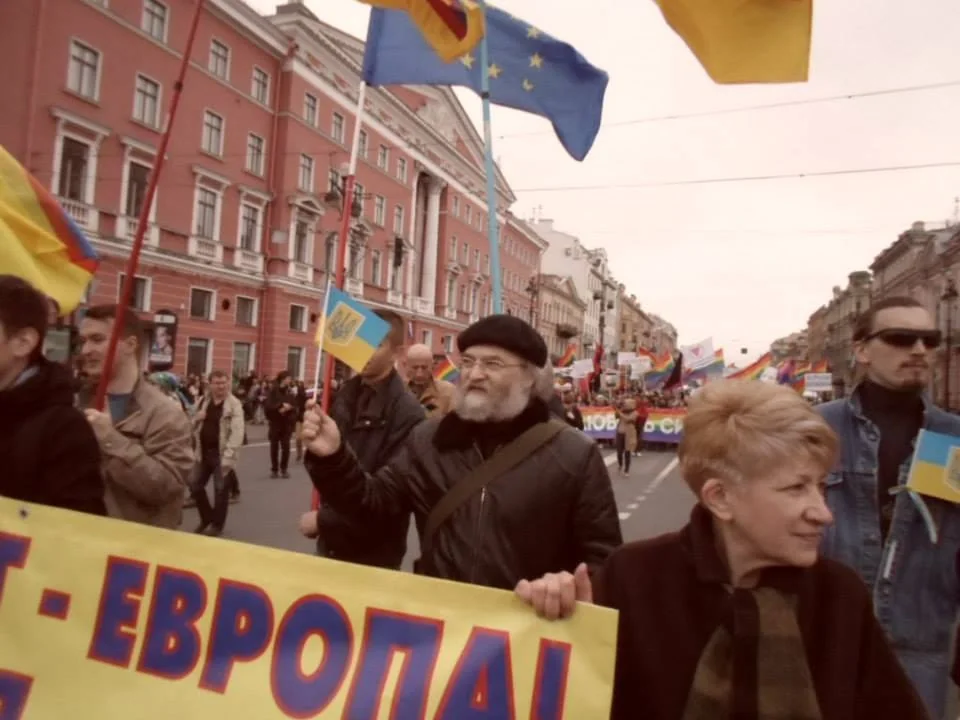
From 2004 he was a regular columnist for the online outlet Grani.ru, where over twenty years he published more than a thousand articles. From 2005 he was a member of the Yabloko party, leaving in 2010; in 2009–2011 he sat on the coordination council of Saint Petersburg’s Solidarity, and took part in Strategy-31. In 2014 he firmly condemned the annexation of Crimea; his article ‘Kill the colorado’, written after the destruction of MH-17, became one of the best-known. In summer 2014 he was stabbed several times in the courtyard of his own building — many read the attack as an attempted political murder. In 2017 a collection of his articles appeared as a book — ‘Agony. The Kremlin Elite Faces the Revolution’.
I am a Soviet political prisoner of long standing — once again a Soviet political prisoner. In a far more vegetarian version, to be fair.
Anti-war stance and arrest
Skobov defined the start of the full-scale war on 24 February 2022 as a struggle of the forces of freedom against the forces of evil and oppression. He openly supported every form of resistance to Putinism, including armed resistance inside Russia. Despite the option of emigration, he categorically refused to leave.
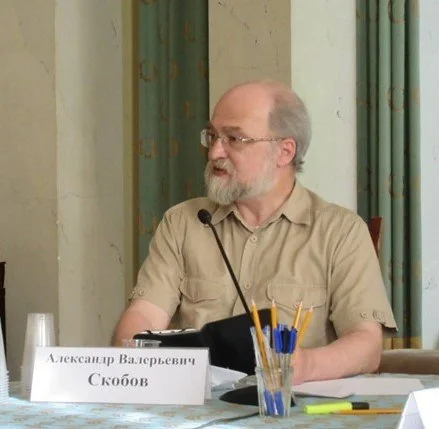
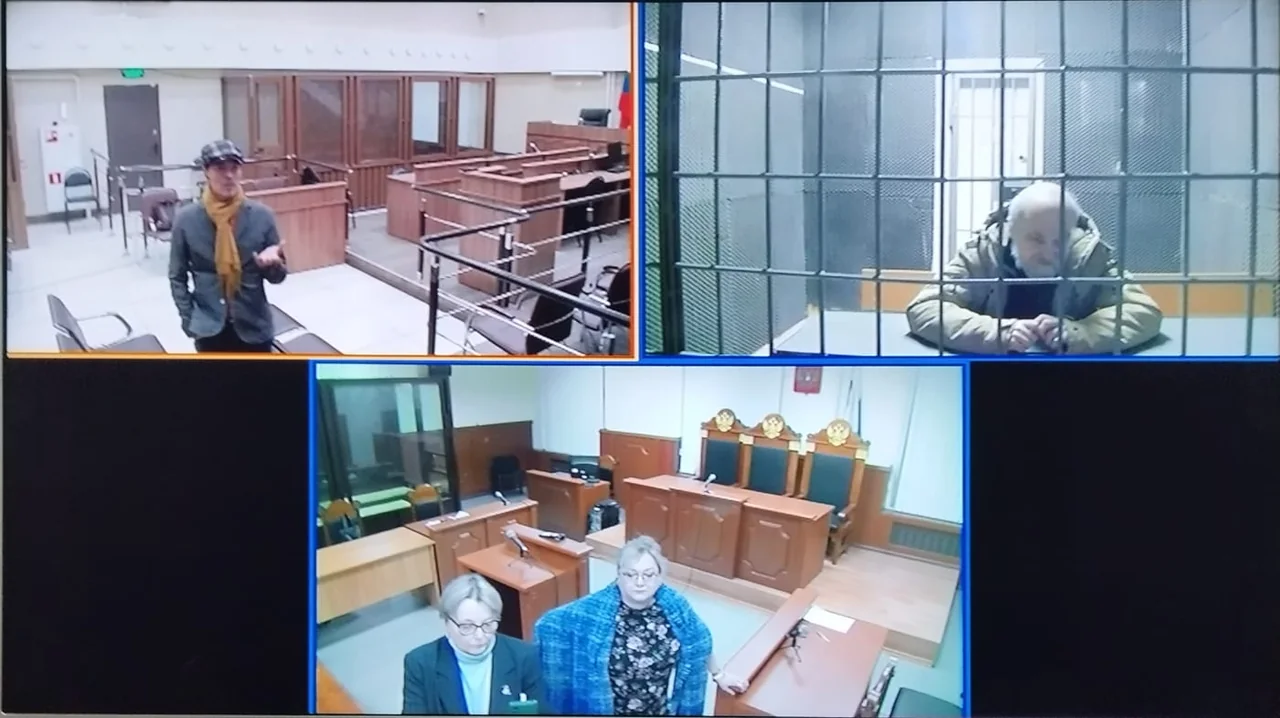
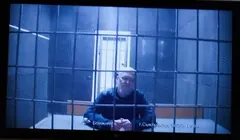
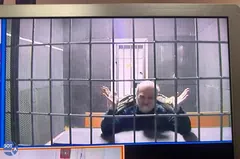
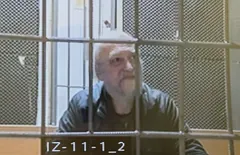
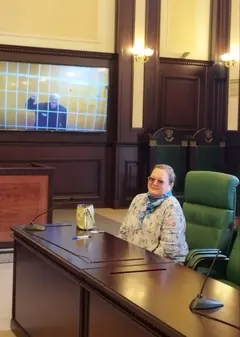
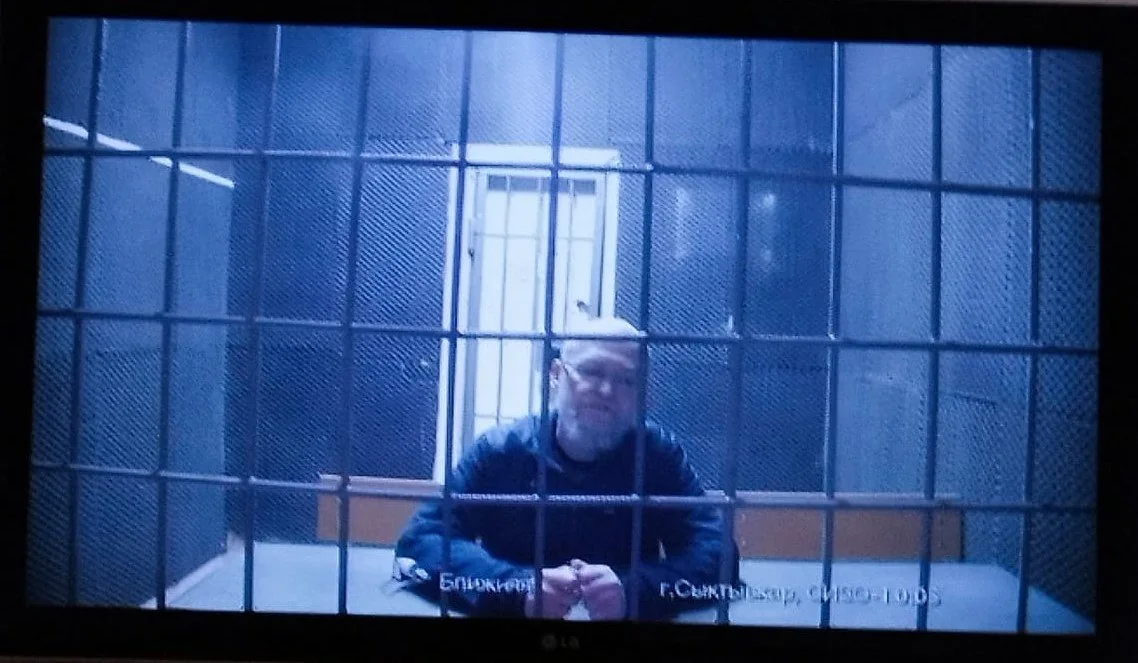
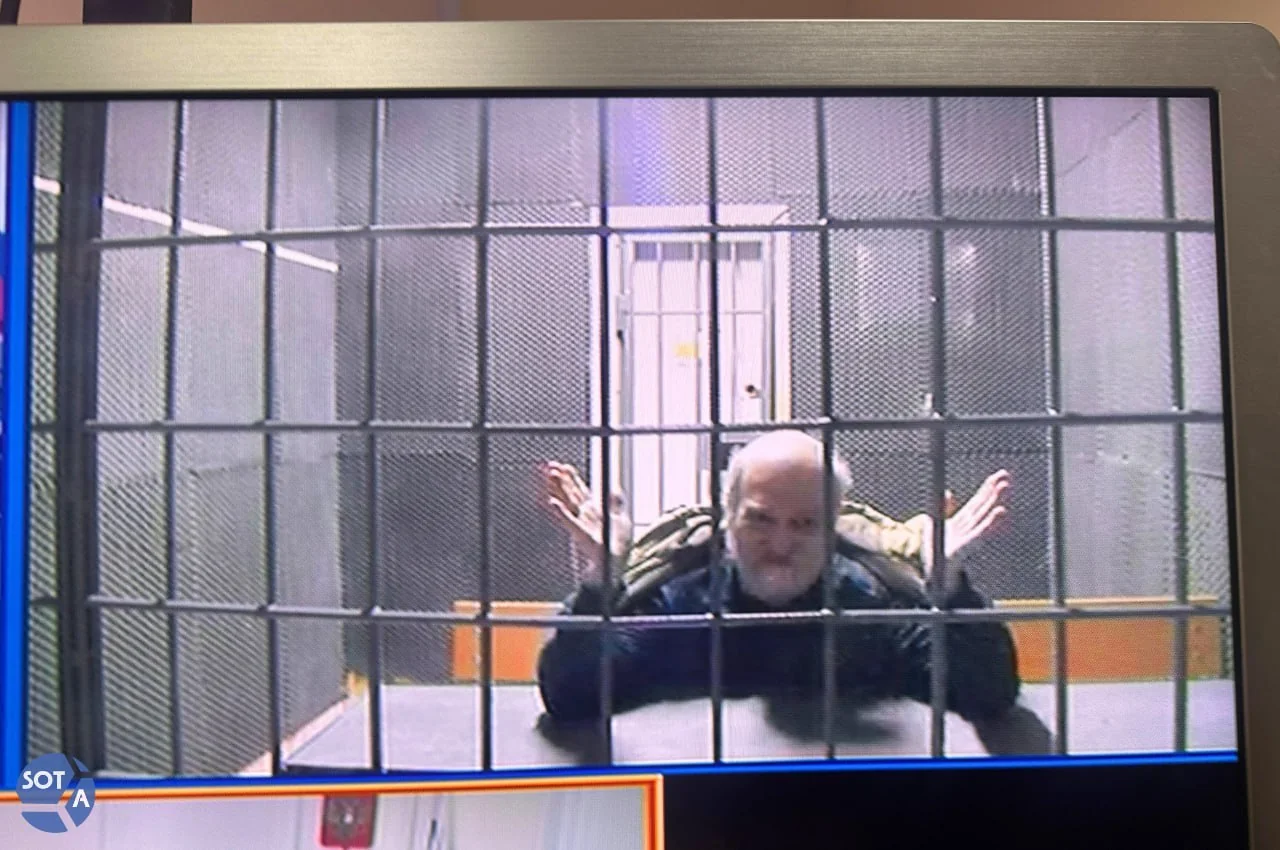
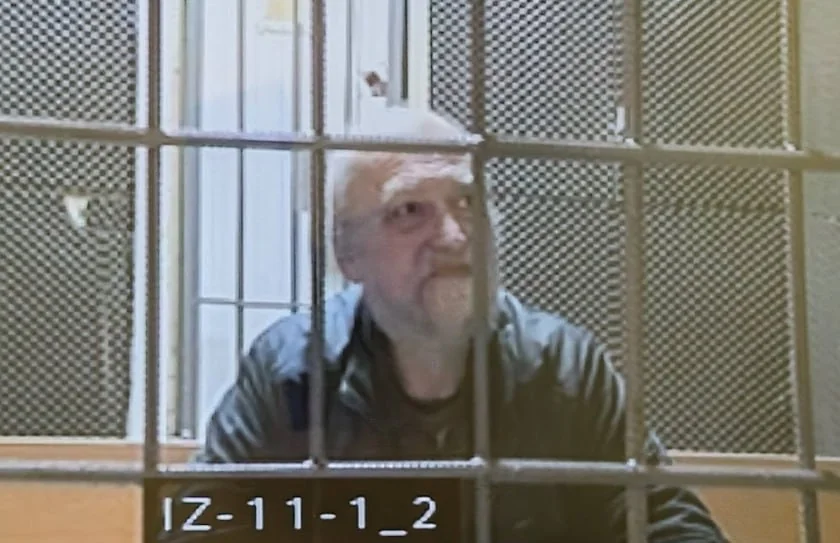
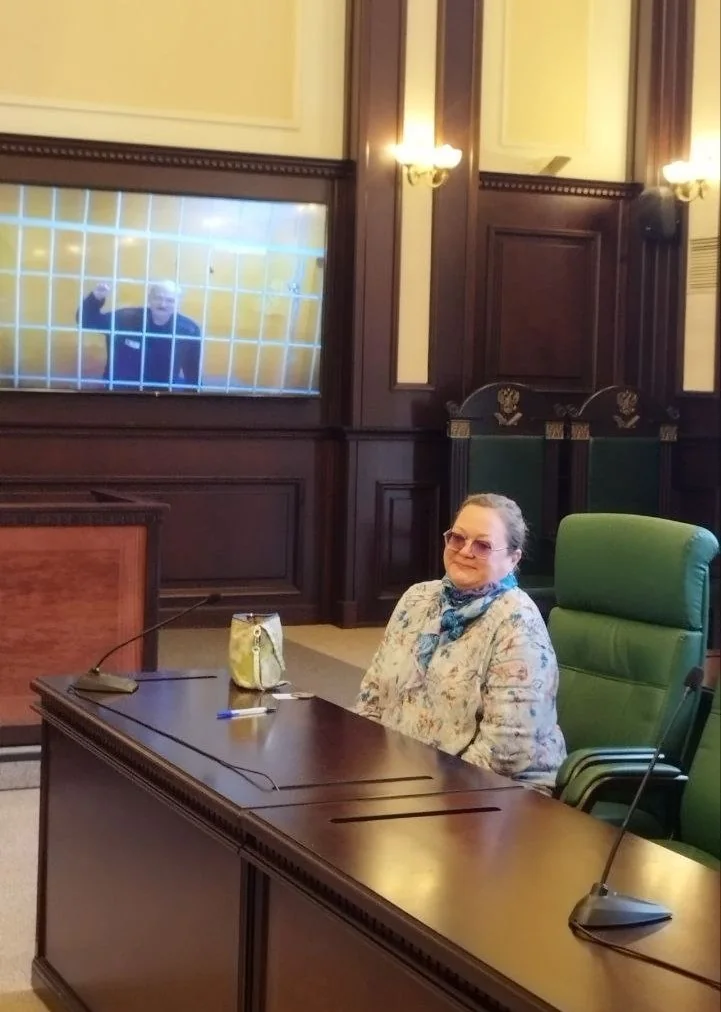
On 22 March 2024 the Ministry of Justice added him to the registry of ‘foreign agents’. On the evening of 2 April he was detained in Saint Petersburg at the home of human rights defender Yuli Rybakov and sent to the pretrial detention centre in Syktyvkar. To the charge under Art. 205.2 § 2 (‘justifying terrorism’) was added a second — under Art. 205.4 § 2 (‘participation in a terrorist organisation’) — for ties to the Free Russia Forum. From late 2024 the trial was held at the 1st Western District Military Court — 18 hearings, during which Skobov delivered five statements from the courtroom rostrum.
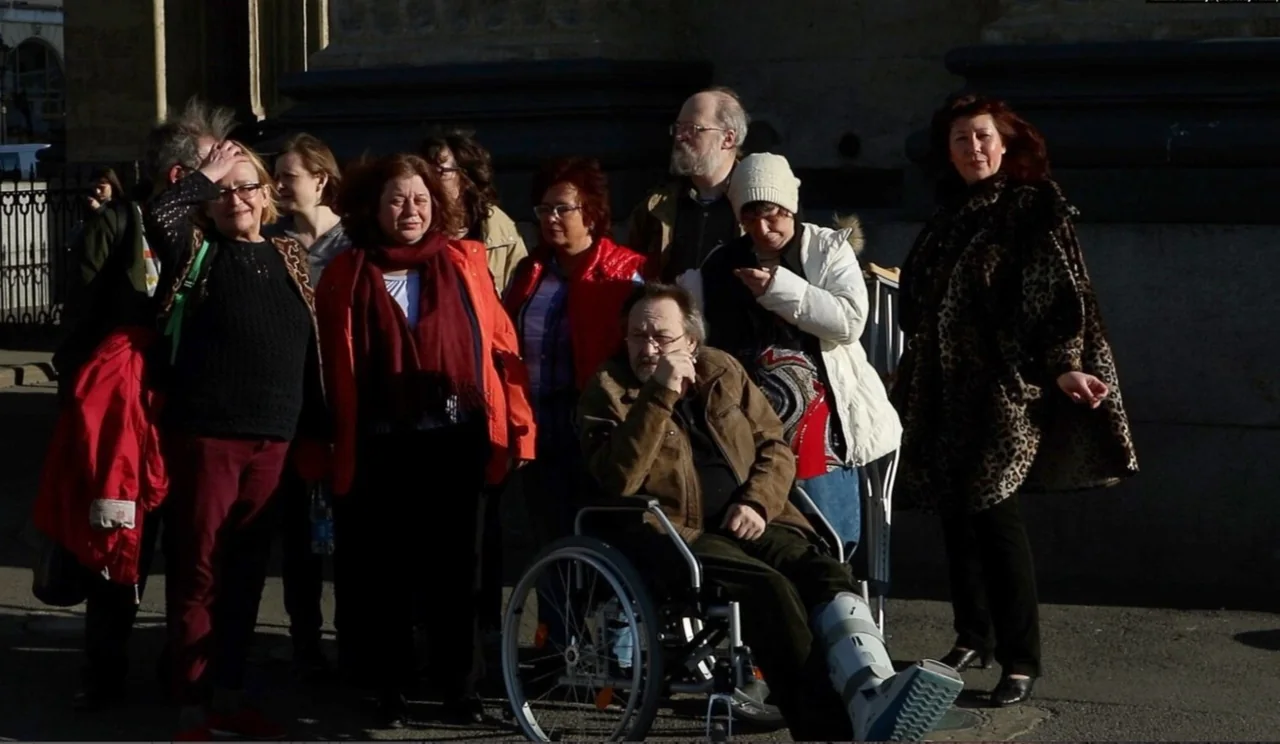
Archive insert III · detention and appeals, 2024–2026. 4 photographs in total.
Now
On 21 March 2025 the 1st Western District Military Court sentenced Skobov to 16 years in a strict-regime penal colony, the first three of which to be served in closed prison. He is now held at the T-2 closed prison in Yelets, Lipetsk Region — and from there continues to write essays on historical and political subjects. Among the most widely circulated are his open letter to young political prisoners and a long interview for the journal Historical Expertise. Memorial recognises him as a political prisoner and demands his release.
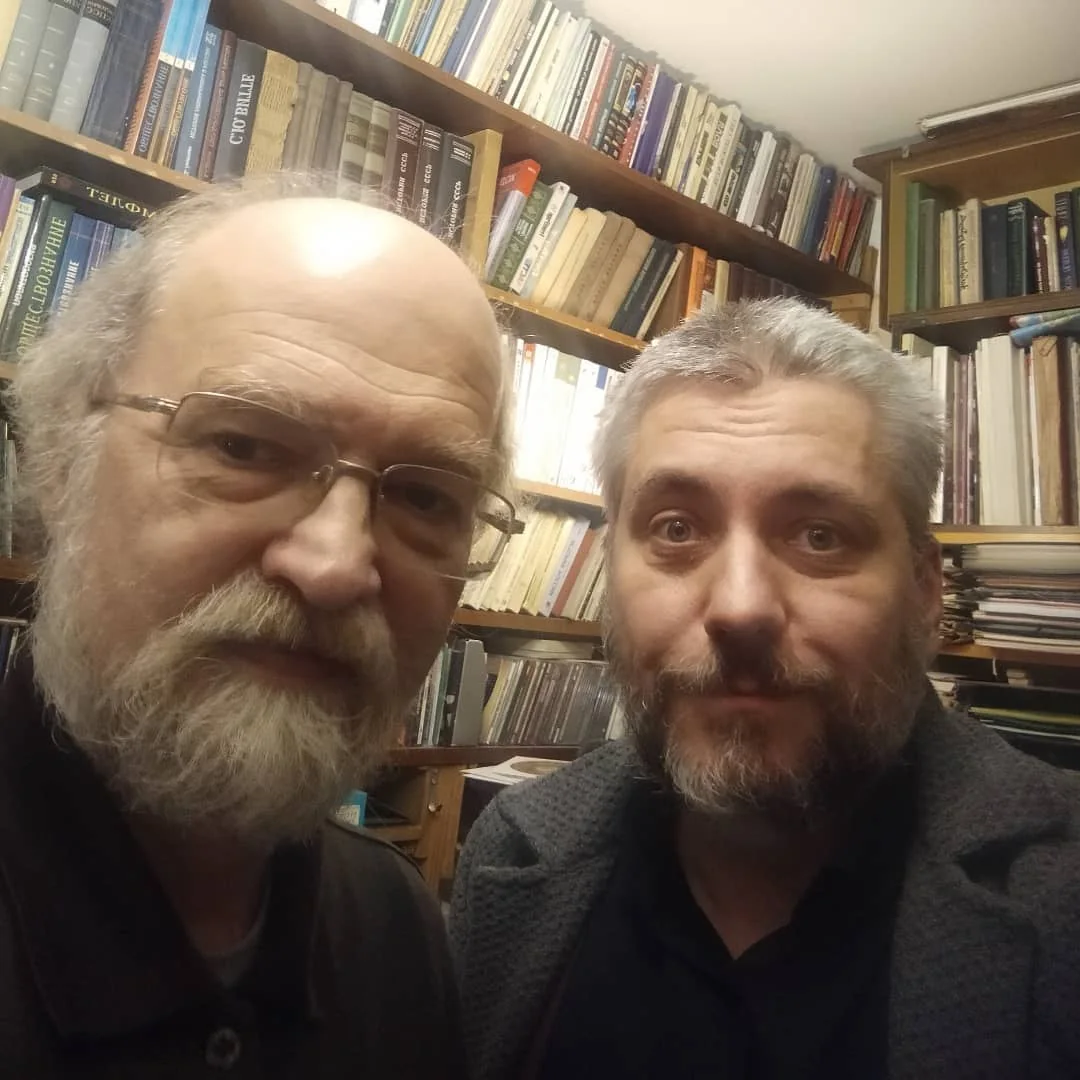
Archive insert IV · more photographs. 9 photographs in total.